
Play Ultimate Tic Tac Toe
A little strategy. A lot of fun.
Win three small boards in a row.
↳ Easy to play. Hard to put down.
More ways to play.
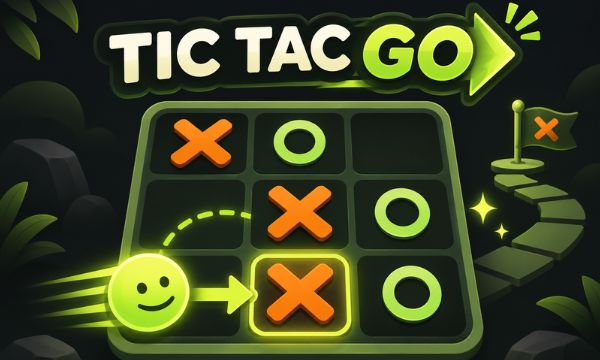
Tic Tac Go
Play in your browser
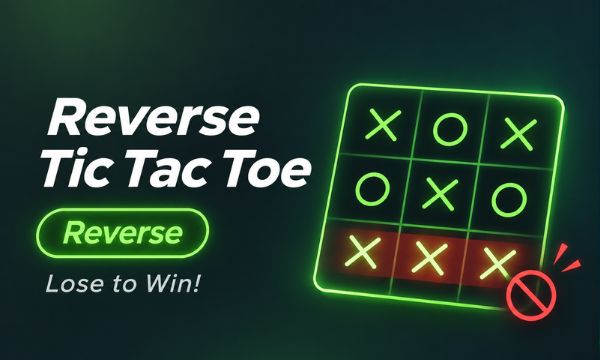
Reverse Tic Tac Toe
A fresh way to play

Gobblet Tic Tac Toe
A fresh way to play
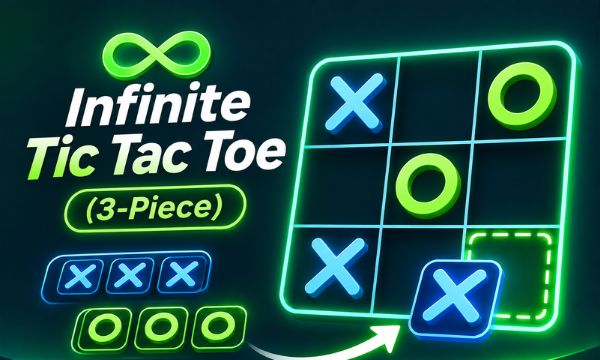
Infinite Tic Tac Toe (3-Piece)
A fresh way to play
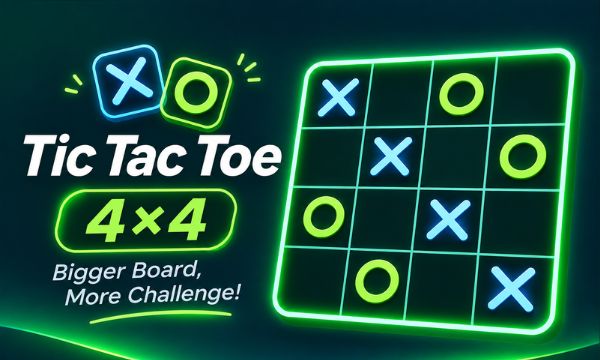
Tic Tac Toe 4×4
A fresh way to play

Gomoku / Caro 15×15
A fresh way to play

Ultimate Tic Tac Toe
A fresh way to play
Tic Tac Toe 7×7
A fresh way to play
How to Play Ultimate Tic Tac Toe: Rules, Special Cases & Winning Tips
Ultimate Tic Tac Toe (also known as Super Tic Tac Toe or 9×9 Tic Tac Toe) transforms the classic pencil-and-paper game into a deep, fast-paced strategy battle. Instead of playing on a single 3×3 grid, you compete across nine interlocking 3×3 boards, where every move you make directly controls where your opponent is forced to play next.
1. Board Setup & How to Win
- The 9×9 Grid: The game consists of one large 3×3 main board. Each of its nine squares contains a smaller, standard 3×3 Tic Tac Toe board (81 squares in total).
- Winning a Small Board: Get three of your marks (X or O) in a row horizontally, vertically, or diagonally inside a small board to capture that entire square.
- Winning the Match: The first player to capture three small boards in a row (horizontally, vertically, or diagonally) on the large main board wins the game immediately.
Important Rule Check: The winner is not decided by who captures the most small boards overall. For example, if you capture four small boards arranged in a 2×2 cluster, and your opponent captures three small boards lined up vertically on the right side, the game ends immediately and your opponent wins.
2. Step-by-Step Gameplay (The Redirection Rule)
The signature mechanic of Ultimate Tic Tac Toe is board redirection—you never freely choose which small board to play in after the opening turn:
- Opening Move (Player X): X starts by placing a mark in any of the 81 squares on the board.
- Sending Your Opponent: The relative position of the cell you choose inside a small board determines which corresponding small board your opponent must play in next.
- Example: If you place your mark in the top-right cell of any small board, your opponent is forced to make their next move inside the top-right small board of the main grid.
- Example: If you play in the center cell of a small board, your opponent must play in the center small board.
- Continuing the Chain: Your opponent places their mark inside that highlighted board, which in turn sends you to the small board matching the cell position they just picked.
3. Special Cases & Edge Rules
Because nine boards are running at once, several special situations regularly occur mid-match:
| Situation | What Happens Next |
|---|---|
| Sent to a board that is already won | Once a small board is won, it is locked. If your opponent's move sends you to a small board that has already been claimed, you earn a Free Move and may place your mark in any open cell on any active small board. |
| Sent to a full (tied) small board | If you are directed to a small board with no empty cells left, you also receive a Free Move to play anywhere on the remaining active boards. |
| A small board ends in a draw | If all 9 cells in a small board are filled without three-in-a-row, that square becomes neutral. Neither player gets it, and it blocks lines passing through that square on the main board. |
| Nobody gets 3 small boards in a row | If all 9 small boards are finished and neither player has formed a line of three on the main board, the match ends in a Draw—even if one player captured more individual small boards (such as 4–3 or 4–4). |
| Self-redirection (Same-board loop) | If you play in the cell matching the exact small board you are currently in (for instance, playing in the bottom-left cell of the bottom-left board), your opponent must play in that exact same small board on their turn. |
4. Practical Strategy Tips
- Look at Where You Send Your Opponent: Beginners focus only on making three-in-a-row locally. Always check which big square your chosen cell points to—avoid sending your opponent to a board where they can immediately score.
- Never Gift a Free Move Lightly: Giving your opponent a Free Move lets them strike anywhere on the map. Avoid playing into cells that correspond to already-won or completed small boards unless doing so wins you the match.
- Fight for the Center Board: Just like in classic Tic Tac Toe, the center small board connects four winning lines (horizontal, vertical, and both diagonals). Controlling it puts constant pressure on your opponent.
- Use Dead Boards as Safe Dumps: If a small board is already tied or impossible for your opponent to win on their next turn, sending them there can be a safe way to regain tempo without giving up key squares.
Loading comments…